How Grappling and Shoving Work in 5e
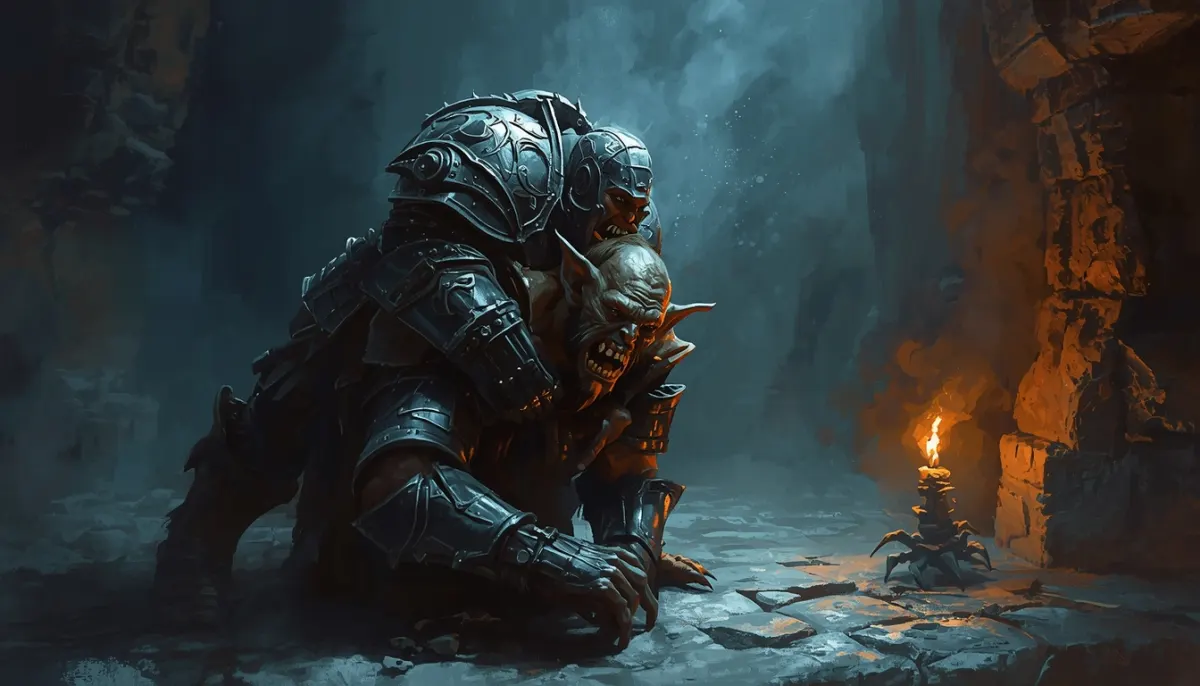
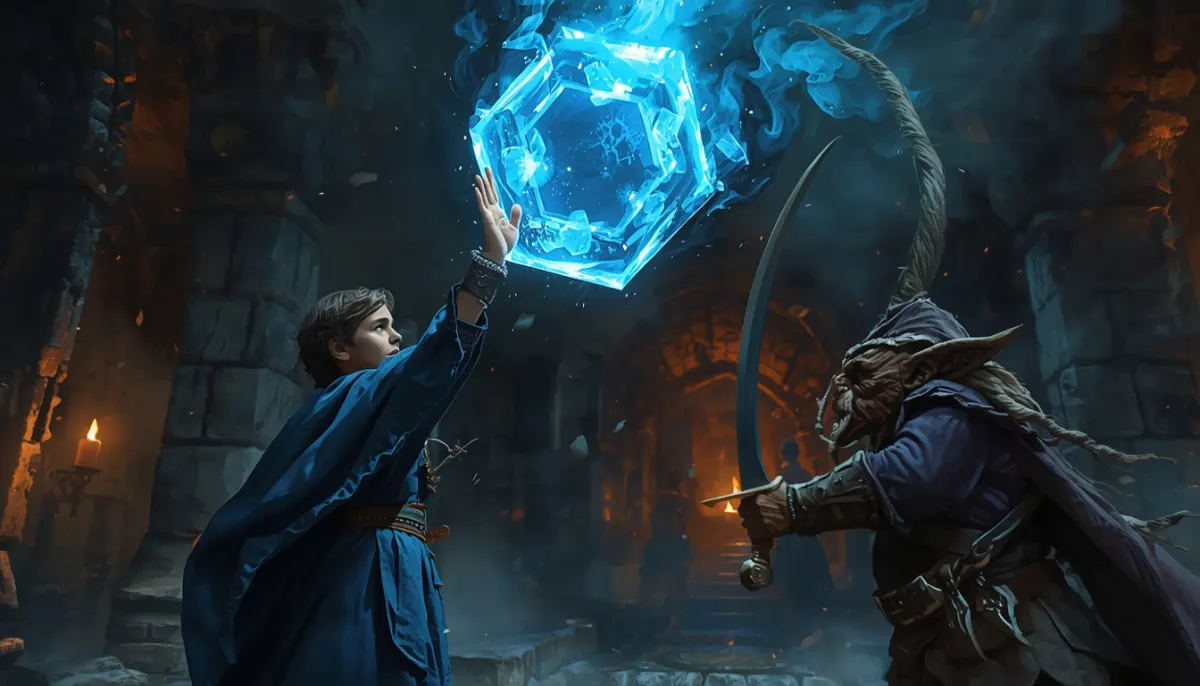
To grapple or shove, replace one attack with an Unarmed Strike; the target makes a Strength or Dexterity saving throw against 8 plus your Strength modifier and Proficiency Bonus. The goblin keeps running. The ogre keeps clubbing the wizard. Somebody at the table asks: can I just grab it? Yes. In SRD 5.2.1 a grapple and a shove are two options of one attack everybody has, the Unarmed Strike. Here is the whole rule, and when it beats a sword.
One attack, three uses
The SRD defines the Unarmed Strike as:
a melee attack that involves you using your body to damage, grapple, or shove a target within 5 feet of you.
Each time you make one, you pick an effect: Damage, Grapple or Shove. Damage is the punch: an attack roll, and on a hit, Bludgeoning damage "equal to 1 plus your Strength modifier". Grapple and Shove work the other way round. You roll nothing. The target makes a saving throw.
The grapple
Grapple. The target must succeed on a Strength or Dexterity saving throw (it chooses which), or it has the Grappled condition. The DC for the saving throw and any escape attempts equals 8 plus your Strength modifier and Proficiency Bonus.
Two limits come with it. The target can be "no more than one size larger than you", and you need "a hand free to grab it". A Medium fighter can grab a Large ogre, but not a Huge giant. A fighter with a sword and shield has no free hand; drop the shield or sheathe the sword first.
What the Grappled condition does, from the SRD glossary:
- Speed 0. "Your Speed is 0 and can't increase."
- Attacks Affected. "You have Disadvantage on attack rolls against any target other than the grappler."
- Movable. "The grappler can drag or carry you when it moves, but every foot of movement costs it 1 extra foot unless you are Tiny or two or more sizes smaller than it."
So the goblin stops running, and the ogre swings at the wizard with Disadvantage. Its only clean target is you.
Getting out
A Grappled creature can use its action to make a Strength (Athletics) or Dexterity (Acrobatics) check against the grapple's escape DC, ending the condition on itself on a success.
The grapple also ends if the grappler has the Incapacitated condition, if the two end up further apart than the grapple's range, or whenever the grappler lets go, "no action required". Note the price of escape: the whole action. A monster that spends its turn wriggling free spends no turn hitting anyone.
The shove
Shove. The target must succeed on a Strength or Dexterity saving throw (it chooses which), or you either push it 5 feet away or cause it to have the Prone condition.
Same DC as the grapple, same size limit, no free hand needed. Push it 5 feet off a ledge, out of the doorway, or away from the cleric. Or knock it flat. The Prone condition:
Attacks Affected. You have Disadvantage on attack rolls. An attack roll against you has Advantage if the attacker is within 5 feet of you. Otherwise, that attack roll has Disadvantage.
A Prone creature stands up by spending "an amount of movement equal to half your Speed". One line further: "If your Speed is 0, you can't right yourself."
The combo the rules hand you
Read those two conditions side by side. Grappled sets Speed to 0. Prone needs Speed to stand. So grapple first, then shove the creature Prone, and it stays on the floor until it breaks the grapple. Every melee attack against it has Advantage. Every attack it makes has Disadvantage.
Order matters. Shove first and it simply stands up on its own turn.
The odds, worked
A level 1 Fighter with Strength 16 (+3) and Proficiency Bonus +2 has a grapple and shove DC of 8 + 3 + 2 = 13.
Against a Goblin Warrior (SRD: Str −1, Dex +2, both saves the same as the modifier). The goblin picks Dexterity, the better save. It needs 11 or higher on the d20 to reach 13: 10 faces of 20.
- Grapple lands: 50%.
- Goblin escapes per try (Acrobatics, +2, no proficiency listed): 50%. With Athletics at −1 it would be 35%, so it picks Acrobatics.
Against an Ogre (Large, Str +4, Dex −1). One size larger than a Medium fighter, so legal. The ogre picks Strength: it needs 9 or higher, 12 faces of 20.
- Grapple lands: 40%.
- Ogre escapes per try (Athletics +4): 60%. Each try still costs the ogre its Greatclub swing (+6, 2d8 + 4).
What Prone is worth. The same Fighter attacks with a Greatsword at +5. Against the goblin's AC 15 that needs 10 or higher: 55%. With Advantage, the chance at least one of two d20s hits is 1 − 0.45 × 0.45 = 79.75%. Every ally in reach gets the same jump, about 25 points per swing.
Grapple and then shove, one per turn at level 1, both landing: 0.5 × 0.5 = 25% against the goblin. Not a sure thing. The payoff is the party: two or three allies swinging with Advantage for as long as the hold lasts.
When to reach for it
- A runner. A Grappled goblin's Speed is 0. Nimble Escape gets it nowhere.
- A bodyguard job. The ogre attacks anyone but you with Disadvantage.
- A ledge, a pit, a fire. Shove pushes 5 feet. The GM decides what is 5 feet away.
- A crowd of melee allies. Prone pays once per friend.
When not to: against a creature two sizes bigger, the rule says no. Against a strong save (an ogre's Strength), the odds sit under even. And a level 1 Fighter alone, with nobody else in reach, usually does better swinging the sword.
The Book of Dice covers the d20 in Part I, The Object, and every way of rolling it in Part III.
This work includes material from the System Reference Document 5.2.1 ("SRD 5.2.1") by Wizards of the Coast LLC, available at dndbeyond.com/srd. The SRD 5.2.1 is licensed under the Creative Commons Attribution 4.0 International License.